After two weeks of flu and other assorted illnesses in our house, it feels like time to write about medical issues when you're traveling.
When we first started traveling with little E, I was astounded at how many people felt that we absolutely should not take him to Paris "in case he got sick over there," My off the cuff response was either "they have babies over there too" or "the United States has one of the highest infant mortality rates in the developed world, he's better off in France." Sarchastic answers aside, it's scary to put yourself in the hands of an ER doctor close to home, and would be even scarier in a country where you don't speak the language.
CNN had a great article this week about avoiding the hazards of medical treatment abroad It starts with the requisite scary story, but ends with some good tips. Here are some simple things you should do before any international (or domestic) trip:
Have the name of a children's hospital or English speaking hospital before you go. Write it on your emergency contact list
If you do run into problems, I particularly liked the suggestion to call the US Embassy and ask for help navigating the medical system, finding English speaking doctors, or finding a translator. We've only had a reason to stop in our Embassy once while traveling (long before kids on a trip to Namibia) but it was a great experience and they were extraordinarily helpful.
Make sure you have a good first aid kit (doesn't need to be fancy), including a first aid book
Pack whatever medication you might need along with dosing information. Include Tylenol, Pedialite (powdered), and Ipecac.
For developing countries, we really like the practical and lightweight Lonely Planet Healthy Travel Series for its useful first aid section and easy to understand information about infectious diseases common in the developing world.
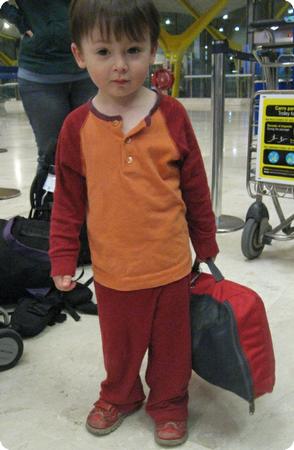
E is packed and ready to go! We usually put some spare clothes, a few books, and some toys in an Eagle Creak Pack-It Cubefor E to carry. He get the special joy of having his own "suitcase," and when he's tired of carrying it, the whole thing fits neatly into my backpack or over stroller handle.
This is the fourth, and final article in our series on air travel with a car seat. In the third article in this series, we reviewed different
ways to carry your own car seat through the airport. If you prefer to leave your own car seat safely installed in your car, or need a flexible car seat for a second car that also doubles as a travel car seat, this article provides an overview of the different products available.
In the coming weeks, we'll be reviewing a few of these products in more depth and then giving them away to our readers. Be sure to check back!
Sit N Stroll Convertable Stroller
Sit 'n' Stroll
Cost: $259.95
The Sit 'n' Stroll is probably the most popular travel car seat option. It is essentially a car seat with a built in handle and wheels so that you can also use it as a stroller. It is approved for use on airplanes, and on some planes, you'll be able to wheel it right down the aisle. The Sit 'n' Stroll is a great option if you need to get in and out of cabs a lot at your destination. It's a bit less great if you will have a rental car at your destination because you need to re-install the seat each time you put the child in it, but still workable. The stroller feature is good for airports and city streets, but not designed for rougher terrain. The Sit 'n' Stroll fits newborns (and can be installed rear facing) up to 40 pounds.
Ride Safer Travel Vest
RideSafer Travel Vest
Cost: $170. On sale for $99 at Amazon
The RideSafer Travel Vest is a unique car "seat" for booster seat aged kids (it fits kids approx 3-9 years old). Instead of a heavy seat, kids wear a supportive vest which then gets buckled into the car. The vest is lightweight and compact (perfect for stowing in a suitcase) and works with both latch and shoulder harness seatbelts. The vest is not approved for use on airplanes. This would be a great choice for parents who carpool or for use in a second car or for travel with an older child who does not need a car seat on the airplane. The RideSafer it's only approved for use in the US (like most car seats available in this country), and it seems like an especially great choice for parents visiting developing countries who want a child restraint, but cannot carry a whole car seat.
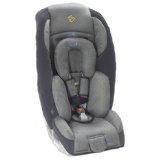
Radian 80 Car Seat
Sunshine Kids Radian Car Seat
Cost: $279.00
The Radian Car Seat is intended to be a primary car seat that also travels well. It is narrower than most car seats (making it a popular choice for three across installations) The Radian also folds flat for travel, and the company sells a special carry bag (or shoulder strap) for travel. I have also seen parents strap this car seat onto the back of a stroller (possible because of the flat-fold). There are two models, one that accommodates birth to 60 pounds, and another that accommodates children up to 80 pounds. This is a good choice if you want your daily use car seat to double as a travel car seat.
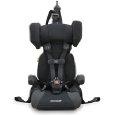
Safeguard Travel Car Seat
Safeguard Go Hybrid Booster Seat
Cost: $199
The Safeguard Go Hybrid Booster seat is designed to be very portable, and folds up to store in its own bag. The seat can be used forward facing only and fits children up to 60 pounds. After 60 pounds, it converts to a backless booster for use by children up to 100 pounds. Because this seat requires latch, it cannot be used on an airplane. It would be a great choice for trip where you're not traveling by plane (for example if you are moving around by train) and need a safe car seat for a rental car. It would also be a good choice for a child who is old enough for a booster (and therefore does not need a child-restraint on the plane) but for whom you prefer to use a 5 point harness on the roads. At home it could be used as a primary car seat and would be great for carpools or a second car.
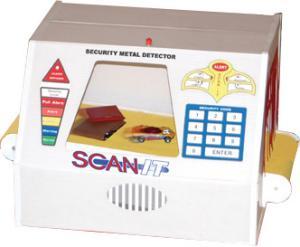
BoingBoing has a quick article about a toy Airport Security Screening X-Ray Machine (pictured) While the toy itself strikes me as not much more than a cardboard box with some fancy stickers and holes cut at each end, the reader reaction in comments is interesting. There's a fine balance between teaching kids not to be unduly worried about putting a treasured blanket or lovey on the airport conveyer belt and teaching them to accept whatever security measures are put in place without question. My kids are a little too young to understand the nuances of security theatre, but I'd be interested to hear what you think in the comments.
Modern Day Treasure Hunts
TravelingMamas (a group written blog about traveling with kids, moms solo travel, and more) has a nice article about
modern day treasure hunting . According to the article:
Letterboxing enthusiasts have hidden upwards of 10,000 waterproof boxes throughout the United States and Canada—in parks, remote picturesque places, even city streets and indoor tourist attractions. Inside these boxes are typically a logbook, rubber stamp and inkpad.
…
When you uncover a letterbox, you stamp the logbook with your own personal stamp, and you stamp your personal logbook with the box’s stamp to keep track of all your finds. Sometimes other small rewards or clues to another letterbox are included as well.
You can use the Letterboxing website to get clues about letterbox locations. This is a great way to make a road trip fun, or even a fun way to make a favorite attraction near home new again.
Once you have committed to carrying your car seat through the airport, there are several different ways to do it. This article provides a roundup of the different options, each with it's plusses and minuses.
Our next post in this series will discuss travel car seats, and over the coming weeks we'll be getting evaluation copies of several products, reviewing them in more depth, and then giving them away to our readers. Be sure to check back!
Your Stroller
Lots of people recommend putting your car seats in your stroller (if you're clever and have a bungee cord, you might even be able to get two in there). This is obviously the cheapest solution, and doesn't leave you with anything extra to store when you return home, but only works if you have a child small enough to ride in a sling or big enough to walk.
Luggage Cart
Luggage Carts used to be a popular way to carry car seats to the gate, but not all airports allow them after security anymore, so if your plan is to use a luggage cart, make sure that you have an alternative way to carry everything.
Traveling Toddler: Attach a Car Seat to a Rolling Carryon
Cost: $29.99
The Traveling Toddler is a set of straps that let you attach one car seat to a rolling suitcase. Your child can sit in the car seat as if it were a stroller. Because this product is a set of straps, it is easy to store when not in use. Make sure that your rolling suitcase is sturdy and in good condition as hauling around the seat and the toddler will definately put some strain on the handle and frame.
GoGo Kidz Travelmate
Cost: List $89.00 on sale for $79.00 at Amazon.
The GoGo Kidz Travelmate attaches to your car seat and makes it into a rolling stroller. Your child can sit in the seat as you go! With some bungee cord and a little creativity you can probably rig the Travelmate up to carry more than one car seat (but no child). Note that the Travelmate must be removed before the car seat is installed in a car.
Cheeky Monkey Backpack
Cost: $39.95
The Cheeky Monkey Backpack is essentially a full backpack harness that attaches to your car seat. It includes a padded waist strap and lumbar support to keep you comfortable. This seems like a great way to keep your hands free (so that you can, for example, push a stroller). This system does not include a cover, so it isn't meant to protect the car seat if you check it.
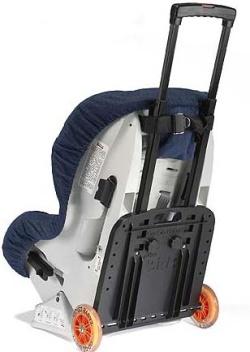
Car Seat Cover, Backpack, and Wheelie
Cost: $29.99 and up
Several different companies make car seat covers that have both backpack straps and wheels. This is a nice option if you want to store other items in the bag with your car seat, or if you need to gate check it. You might want to experiement a bit (or read reviews) to determine which fits your car seat best. Also, some car seat manufacturers make special covers that fit their seats snugly.
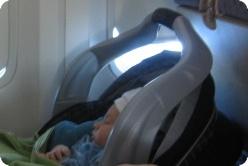
Here is a picture of E asleep on our flight from Madrid back home to Seattle. He's wearing a Cares Harness. The harness is FAA approved, easy to set up, weighs only a pound, and has made getting through the airport much easier than it was in the days when we brought a car seat. Best of all, we know that E is seated safely and he likes having a little more space than his car seat would allow. It's perfect for trips like this one where traveled exclusively by plane, train, subway, and gondola
Know What You Need
In general, make sure you know the car seat laws at your destination. Car seat laws vary by state in the US. For example, a child who can ride in a booster seat in California may need a seat with a five point harness in Washington State. This Website has links to car seat laws in the US and Canada.
Checking A Car Seat
Most airlines do not consider car seats and strollers as part of your baggage allowance. (e.g. United). Other airlines do count car seats as part of the baggage allowance. For example, Southwest and Northwest allow you to check in a child safety seat or stroller as a substitute for one piece of checked baggage (i.e. it counts towards your allowance). If you plan to check your car seat (or stroller) check with your airline for their specific baggage allowance, and remember that domestic and international flights often have different baggage allowances.
Use caution when checking a car seat. Remember that advice not to use a car seat that has been in a car accident? I've always been worried about the way the seat might be handled, and the other baggage in the cargo hold shifting around during flight. I've also heard horror stories from friends who checked car seats only to have them not show up (or show up damaged) at their destination, even in a carry bag. Some parents carry their seat through the airport and then gate check it to minimize the risks (this works only for domestic flights). Other parents use the car seat onboard the flight (remember that booster seats cannot be used on-board)
Many airlines consider car seats and strollers to be "fragile items" and do not accept liability if they damage a car seat (or stroller) checked in as baggage. Be sure to find out what your specific airline's policy is before checking in your items.
If you do choose to check your car seat, you would ideally place the seat in its original packaging (which was designed to protect the seat from damage during shipping). If the packaging is not available, place the car seat in a protective bag and consider padding it well with spare clothing.
Avoid Bringing A Car Seat When You Can:
The best way to avoid lugging a car seat through the airport is to arrange things so that you don't need a car seat at your destination.
We generally try not to travel with a car seat. I have extra seats at my parents house and at my husband's parent's house (it's cheaper and safer than renting) Another option is to borrow a car seat from a trusted friend at our destination. When we can, we do without a car altogether at our destination and use public transportation instead.
Renting A Car Seat
Be very careful about renting a car seat. While we've had some fine experiences renting seats from Avis and Hertz, we
Learned our lesson the hard way with a rental car discounter. Since we wrote our expose (and the
resulting ABC news story aired) we've heard from many parents who have had similar experiences at many different rental car agencies. If you must rent, read these Safety Tips for Renting Car Seats
Carrying On Your Car Seat
There are times when you absolutely need a car seat at your destination. In those cases, your best bet is to carry your car seat on board.
Not all flight attendants are equally well versed in the minutia of car seat installation and airline policy, so it can be helpful to bring along a printed copy of the airline's regulations and to make sure that your car seat is clearly marked as "FAA Approved."
Here are a couple of points to remember: Car seats are not allowed in exit rows. Furthermore, many flight attendants will require that the seat be installed in the window seat (so that it doesn't block anyone who needs to exit in an emergency), but individual airline policies vary. If you want to install the seat in the middle or aisle, be prepared to move the seat or to make a polite but firm case for keeping it where it is (and to back up your case with the appropriate documentation). Many parents have also reported flight attendants questioning a rear-facing installation (and some business class seats do not accommodate rear-facing installations). We recommend bringing along the car seat manual to help address any questions or issues that might arise.
Our next post in this series will discuss carriers that help you get your car seat through the airport, and our fourth post will cover Travel Carseats. Over the coming weeks, we'll also be posting some more detailed reviews and great giveaways, so be sure to check back!
This week, I'll be publishing a series of articles about Flying with Car Seats. This article, which covers the requirements and guidelines related to flying safely with a baby, toddler or child, is the first installment!
Who Needs A Carseat On An Airplane Flight
Neither infants nor children are ever required to use a specialized child restraint onboard. However, safety experts recommend that all children be strapped in with an FAA approved 5 point harness (rear facing for infants on domestic carriers) to protect them in case of turbulence. That said, only 13 people per year die on commercial flights, versus 43,000 on the highways, so many parents feel comfortable carrying a lap infant in their arms and forgoing the car seat on board for older kids. This interesting
NY Times article highlights some of the concerns and has a particularly interesting discussion of this issue in the reader comments section.
Booster seats are designed to work with a lap and shoulder belt, and therefore may not be used on a plane. Once your child has outgrown a harness seat, he or she must ride using the airplane's seatbelt. Ideally, you will still carry the seat onboard the plane with you so that it doesn't get lost or damaged in checked baggage. Consider a model that folds or has a removable back so that you can stow it in the overhead bin.
Another car seat alternative while you're on board the plane, is the Cares Safety Restraint by Kids Fly Safe. The CARES harness weighs just one pound, is FAA approved, and fits in a 6" stuff sack. The harness is appropriate for children who are old enough to ride in a car forward facing & weigh over 22 pounds. Because the CARES harness is FAA approved, it can be used on any flight. However, some flight attendants have not seen it before, so it can be helpful to bring along the documentation in case they have any questions.
International Carriers and Car Seats
Laws vary depending on where the airline is based (review your carrier's website for details), but many European carriers do not allow rear-facing car seats at all, and do not allow infants under 6 months old to travel in a car seat. On board, your lap infant will be given a special infant seat belt that attaches to your adult belt for takeoff and landing. Once you are airborne many carriers have bassinets or special seats (Picture of Airline Baby Bed) available for infants seated in the bulkhead rows. The seats need to be reserved in advance.
I normally post a link roundup on Friday, but this week's story about TSA confiscating baby food and formula is worthy of an extended post.
The New York Times ran an article called Bringing Along Baby Food? Not Too Much, Rules Say about parents who planned to carry on enough baby food and formula to accommodate any winter flight delays (remember neither baby food nor formula is available once you've cleared security). A portion of the food and formula was confiscated by a zealous TSA agent who deemed that they had "more than a reasonable amount."
It is difficult to understand who was served by TSA second guessing a parent's best judgment about how much food to pack for their child. As a traveling parent, I've learned to plan for contingencies like weather delays, a jar of baby food that seems off, opening a usual favorite only to have baby reject it, etc etc etc. Packing enough food and diapers is hardly an exact science, and one tends to err on the side of excess because the consequences of having too little are so terrible. Do we really want individual TSA agents deciding how much each child should eat?
I empathize with these poor parents, and hope that the TSA responds with more specific guidelines for parents and agents. I have my own uncomfortable memories of travelling 8 months pregnant (with D) from Paris to Seattle, alone, with 16 month old E and having an over-zealous British Airways agent question everything in my carryon down to the number of diapers. I'm generally of the opinion that you don't argue with flight attendants, security agents, or anyone in a position of power at the airport, but you can imagine that I would be willing to miss a flight if I couldn't bring along enough food or diapers to keep my kids well fed and clean.
Furthermore, I've never understood why diapers, baby food and formula aren’t for sale in the airport shops. It seems like parents would pay a pretty penny for any of those items at the critical moment.
All that said, the reality is it's best to avoid the discussion in the first place, and that means a little clever packing when it comes to baby food and formula.
Tips for Travelling Parents:
Bring Rice cereal or baby oatmeal (powdered). We use a
airtight Lock & Lock container
to keep it from invading the rest of our stuff (by the way, these containers are IDEAL for crackers and toddler snacks too). It can be mixed with water or stirred into babyfood to make it more substantial.
Pack a Banana, you can easily mash it with a fork
Buy yogurt after security. It can be difficult to find plain yogurt, but you can avoid most of the sugar by not mixing in all the fruit at the bottom.
We like powdered formula in individual serving sizes. I continue to carry it even now that both kids drink milk since milk isn't available onboard many flights.
Finger foods are a great choice as baby begins to be able to eat them. Puffed rice, bread slices, crackers, O's and freeze dried fruit all travel well and are healthy choices.
Some airlines do carry baby food (call ahead to find out), but there's no guarantee that there will be enough on your flight & the baby food I've seen has been low quality canned food.
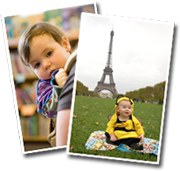
About Me I'm Debbie, mother of three delicious kids and I write about traveling with little kids. That's my daughter in the backpack and my son in Paris on Halloween.
 Save to del.icio.us
 for its useful first aid section and easy to understand information about infectious diseases common in the developing world.

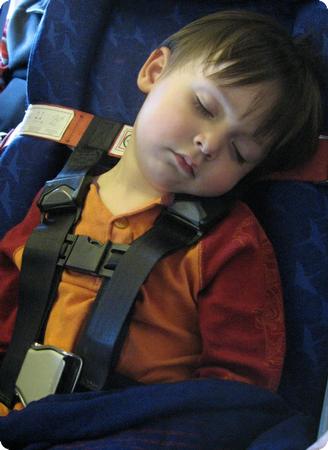
 . The harness is FAA approved, easy to set up, weighs only a pound, and has made getting through the airport much easier than it was in the days when we brought a car seat. Best of all, we know that E is seated safely and he likes having a little more space than his car seat would allow. It's perfect for trips like this one where traveled exclusively by plane, train, subway, and gondola