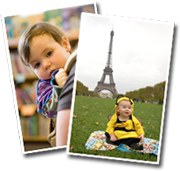
One year ago, we took the kids to Barcelona, Madrid and Sevilla
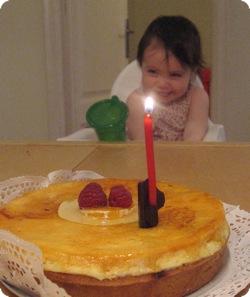
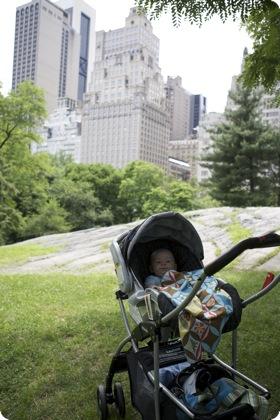
The trip was a big one in lots of ways. We celebrated D's first birthday in Barcelona, discovered the joys of riding the train from Sevilla to Madrid instead of flying (seriously, it was great), and we somehow survived the Alcazar, the Miro Museum and the Prado Museum with two kids under the age of three! But the one thing I absolutely would not miss was the look of glee on E's face as he tried the IDEAL toddler food for the first time Churros and Chocolate at the best Xocolateria in Barcelona.
Does any of this sound appealing? Our city guides include our best tips and recommendations from the trip, and you'll find links to each of the old blog posts on the right hand side of each city guide.
Barcelona With Kids
Madrid With Kids
Sevilla
4 comments |
Posted on October 18, 2008 |
 Save to del.icio.us
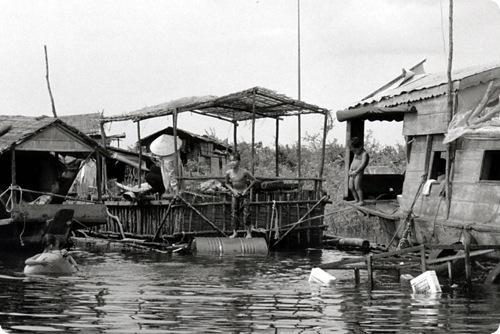
I don't seem to be able to let the week pass without one final post about children in poverty. This is a picture from our trip to Phnom Penh the capitol of Cambodia. By local standards, this family is doing ok. They live on the river. They have a house. They probably catch fish for a living (and that small pen is a floating fish-farm), just off-camera there is another floating pig-pen with four pigs in it. Look at the kids, one is swimming in the water (the same water that the pigs refuse drops into), another is peeing into the water, and a third looks like he's about to jump in. They look like they're having fun.
Still, does anyone think this is a healthy environment to raise kids in? They don't have electricity. If they want clean water, they need to boil it first. Odds are that someone in the family had a debilitating land mine injury, and everyone needs to be careful when they step off the boat, because the area still hasn't been completely cleared of mines.
There's such a spirit of hopefulness in the country, it's hard not to want to help. Cambodians have great entrepreneurial spirit, and small businesses are springing up everywhere. Many NGO efforts that we witnessed were focused around teaching traditional crafts like silk weaving or carving and helping get rural and disabled people set up with their own craft businesses. Through Kiva you can make your own microloan and help a budding entrepreneur lift their family out of poverty.
Photo Friday: Please Share Your Photos Too:
Share a favorite travel photo by adding your link below. First timers, here is
more Information about Photo Friday
Filed Under:
photo-friday
10 comments |
Posted on October 16, 2008 |
Save to del.icio.us
I've been a subscriber to Cookie Magazine since the beginning, and I particularly love the magazine's travel articles, which focuses on finding fun things to do with kids in destinations that people wouldn't necessarily think of as "kid friendly." So I was very excited when Cookie Magazine's Blog Editor asked me to write a short guest post on a useful foreign product that you cannot buy here in the states.
Here's the Article: foreign finds week: physiologica nose drops
About DeliciousBaby
DeliciousBaby is about Traveling with Young Kids. We have lots of tips and helpful advice to make your family vacation easier and more enjoyable. If you are new to DeliciousBaby, you might want to check out some of these useful links and resources:
Subscribe to DeliciousBaby for Free
We have some great articles and free giveaways coming up in the next few weeks. I'd like to invite you to subscribe to this blog so that you don't miss a thing.
To subscribe by RSS or Email, click the "Subscribe to our Feed" button at the bottom of this post or in the right hand column on our home page.
0 comments |
Posted on October 16, 2008 |
Save to del.icio.us
I've been astounded to see how many of the bloggers whose work I read regularly participated in Blog Action Day today. In reading through everyone's posts, I was struck by how many people said that the personal connection they made by seeing poverty first hand on their travels opened up their eyes to the need to do more to help fight poverty. The posts are fascinating, and each one showcases a different dimension of the problem. I thought I'd share some of those posts with you.
Mom Most Traveled's enlightening post on poverty gives a great understanding of what it really means to live on $1 per day, and what kind of aid actually helps.
Transient Travels post has some great facts about poverty and what you can do to help
Pam at Nerds Eye View has a great photo & post about one of my favorite places Cambodia go there to learn why people there need our help.
Tourism Keys shares a story about hosting a visitor from Zimbabwe along with their ideas about what one person can do to combat poverty.
The Traveling Mamas tell you how you can Fight Poverty with Voluntourism and My Bella Vita also writes about Reversing Poverty Through Voluntourism
The Location Independent Blog posted about dealing with the day to day realities of poverty when you live in a developing country
And Sheila over at the Family Travel Logue wrote about poverty here in the United States it's a great point, especially in these tough economic times... many of our local charity organizations are facing greater need than they've seen in years but receiving fewer donations. Why not pick up an extra case of beans or meat stew (two great protein sources) on your next trip to Costco and drop it off at the local food bank?
If you have published a travel related Blog Action Day post, let me know in comments.
7 comments |
Posted on October 15, 2008 |
Save to del.icio.us
Today is Blog Action Day, and over 9000 bloggers around the world are uniting to post on a single subject: Poverty. I thought I would share a personal experience in the hope that it inspires you to help.
In 2001, long before E was born, my husband and I spent 2 weeks in Madagascar, an island-nation off the coast of Africa. It's a spectacular place, with unique flora and fauna (many varieties of baobab trees and lemurs) and diverse micro-climates. It also happens to be one of the poorest countries in the world. Like most tourists, we came to see the sights.
The trip turned out to be our first brush with real poverty, and it opened our eyes to the advantages we have simply because we were born in the United States. More than the images on TV or anything we'd read in a book, meeting families whose every-day life was a struggle gave me a new perspective on poverty.
Most Americans know little about Madagascar beyond the Dreamworks movie. The island, sometimes called the 7th continent, is incredibly diverse. Of the 12,000 plants native to Madagascar, 85% are found nowhere else in the world. Madagascar's rainforests and other micro-climates are still a largely untapped resource, and the environments harbor undiscovered plants and animals that scientists believe may hold the secrets to curing cancer and other diseases. Yet poverty, and the need to survive, drives locals to deforest the country at an alarming rate, using techniques like slash-and-burn agriculture to keep their families fed.
When we visited Madagascar, the per-capita GNP was $220. That's about 60 cents per day, per person. Can you imagine surviving on that much, let alone pulling yourself out of poverty? An average person doesn't even have that much. Most of the wealth is concentrated in the hands of the business class and politicians, and there are very few opportunities to break out of one's station in life. The bustling capitol city, Tana, is overwhelming in it's own way, but to really understand what it means to "live off the land" in a poor country, you need to go out to the villages.
We spent much of our trip camping in remote locations, but we journeyed to the south for a few days at an Berenty Private Nature Reserve, a pleasant lodge where tourists can easily hike through the spiny desert and watch the sifakas (a kind of lemur). It seemed strange to sleep in cabins with en-suite bathrooms and feast on elaborate dinners while the locals were making do with so little, but the reserve brings in much-needed tourist dollars, and provides an economic incentive to keep the forest safe from the real industry of the area -- sisal production.
On our drive in, we gained our first understanding what it means to be truly poor. As we passed the closest "village," a collection of roadside shacks not much bigger than a child's playhouse in the U.S., people rushed out to their "shops" to sell their goods: sculptures of chameleons, turtles, and of course lemurs carved out of the scarce local wood. A dollar or two for each provided much needed income for families struggling to survive in the parched desert. We made our best effort to spread our money around evenly, and walked away with several carvings we now treasure.
We wanted to understand more, so we took time out from our nature walks at the reserve to visit the nearby sisal factory. Sisal, a plant native to Mexico, grows well in Madagascar and is used to make many products, including this rug from Pottery Barn. It turned out that the equipment was broken, leaving the locals who normally worked in the factory unemployed. A trip to the market was particularly depressing, with few sellers (and fewer buyers). The only products were rice, beans, and dried corn. Unlike other areas we visited in Africa, rice and beans were sold by the cup... it seemed that few families could afford to buy more than a day's worth of food. Uncertain what to do, we bought a small amount of rice and beans and then left them in our hotel room for the cleaning crew.
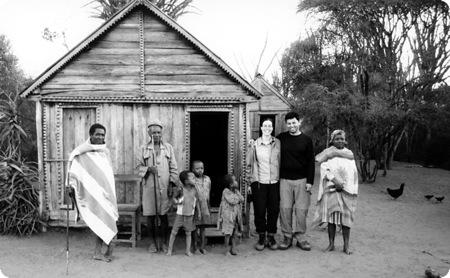
On another day, we asked our guide to drive us through the sisal fields, and he suggested a sunset stop on a hillside overlooking the plantation. The lookout turned out to be the home to the groundskeeper and they were surprised and excited when we showed up. Compared to the homes we'd seen on the drive in, theirs was a palace, and of course they were among the few local families who wouldn't have been put out of a job by the factory closure. Still, it was evident that nobody was eating enough, and of course, the creature comforts that we take for granted, like running water, electricity, or manufactured goods were non-existent. We couldn't really communicate, but it was fun to show them pictures of Madagascar (and of snow back home in Seattle) on our digital camera and to play with the kids. Before we left, we snapped the picture that is the lead for this story.
It strikes me that I don't have a tidy way to wrap up this post. The poverty we saw was upsetting on multiple levels and we struggled throughout the trip to decide what our responsibility was and how to best help. If I have one clear takeaway, it's that it would be incredibly difficult for these people to change their circumstances on their own, and as people lucky enough to be born in vastly different circumstances, we have a responsibility to help.
Even if I didn't care on a moral level about about the suffering, at an intellectual level it upsets me to think that the kids growing up there could be the next Mozart or Einstein, but they wont have an opportunity to develop their talents and share them with the world at large. With poor nutrition, few options and minimal education, they'll never have the chance to contribute beyond their own villages. Who knows what potential future nobel laureate might be living in one of these shacks? But let's pretend for a minute that I care more about maintaining my own economic advantage than building a world where the best and brightest talents are applied to solving our problems. Those untapped rainforests continue to disappear because the need for basic food and shelter leaves few other options. More research is needed to find out which yet unresearched plant, animal or insect might hold cures to todays ills. We simply cannot afford to let those rainforests disappear. Each one of us has a responsibility to help fight poverty, if only because it's in our own best self interest.
What's the solution?
Obviously, this is a complex problem and no one organization holds the "correct" answer. There are charitable organizations doing wonderful work around the world. In Madagascar, we saw first hand the work that the World Wildlife Fund was doing to provide the information and means for locals to get more out of their farms by using new agricultural techniques and provided stoves that didn't require charcoal. We also saw and respected the work they were doing to set up nature reserves and provide the training that would enable locals to work in them.
Please take a moment to consider whether your circumstances, even in these hard economic times, allow you to donate to an organization that fights poverty. When you compare yourself to people surviving on beans, I'm sure they do. A donation to the World Wildlife Fund, a local food bank, or the organization of your choice goes further than you realize.
If you have published a travel related Blog Action Day post, let me know in comments.
Related Posts
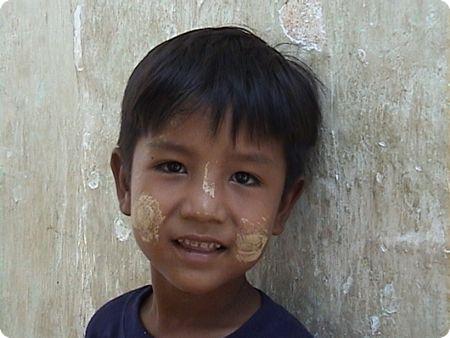
A Refreshing Change, Beautiful Pictures of Myanmar
7 comments |
Posted on October 15, 2008 |
Save to del.icio.us
I'm always on the lookout for creative ideas to keep the kids busy on a plane, so I loved these Toddler travel tips from RollingThroughLooneyVille. Want even more, check out my Top Ten Tips for Keeping a Toddler Busy on a Plane and Ten Great Travel Toys You Already Have at Home and here's a great free craft from Sanrio that would be lots of fun on a plane or train.
I loved this tip from TravelSavvyMom about How to Convert a Hotel Room Into a Suite. My kids are still a little young to do this safely, but you can bet I'll keep this trick up my sleeve for later.
My kids love riding on any kind of public transportation, and I've started to really enjoy the above-ground view of the city you get from bus windows, so I loved this post on MotherOfAllTrips about riding London's double decker busses with kids. Not only is Mara right in every way, but it brought back fond memories of E dragging us to the huge windows at the top of each double decker bus and singing "wheels on the bus" during each bus ride on our trip to London.
Here's a great reminder from OnTheGoWithAmy that sometimes the big tourist attractions just fun for kids. She balances it out with a post on 10 things kids do enjoy in Philadelphia
Deals
The economic meltdown has one upside for people who will be traveling internationally this fall, the US Dollar is performing better against other currencies right now, including the Euro. Australian Dollar and Mexican Peso. Peter Greenberg has a tourist destinations whose currencies have been particularly hard hit, and Frommers summarizes the currency situation in some common tourist destinations
Christopher Elliot points out that Fall and Winter travel prices are likely to be lower for just about everything from airfares to hotels and cruises. We're just starting to watch some amazing fall travel deals roll in, and it looks like he's right. There are suites at the Venetian hotel in Las Vegas for $119/night and crashing airfares to Hawaii. If you haven't already blown your annual travel budget, you might want to re-read our tips for fall or winter vacations that won't break the bank.
The Association of Children's Museums is offering free admissions until October 26th at many US children's museums
2 comments |
Posted on October 14, 2008 |
Save to del.icio.us
It's no secret that once you have kids, travel is no longer a care-free vacation. One way to give yourself a little downtime at your destination is to bring a trusted babysitter or nanny with you from home. The idea sounds idyllic for all parties, right? The nanny gets an all-expenses-paid vacation, and you have some help with in-flight meltdowns and a chance to enjoy a grown up dinner with your spouse. Unfortunately it's not as easy as it sounds. Sometimes the pressures of traveling can put a strain on the employer-employee relationship, and the family ends up loosing a trusted babysitter at the end of the trip.
Some advance thought and preparation on your part can help the trip go more smoothly, though. If you're considering your own babysitter-enhanced vacation, here are some factors to consider:
-
It's not an all-expenses-paid-vacation if you're working all the time. Your nanny's first responsibility is to you and your children while she's with you, but remember that if she's working around the clock, she'll probably feel like she's missing out. When we travel, we have a set schedule, just like we do at home (though the hours are different). That allows the nanny to make her own plans. It also makes my expectations clear. We both know when she's expected to help with the kids, and when she's not.
-
It's not an all-expenses-paid-vacation if you pay for the extras Most babysitters live a frugal lifestyle. Extras like dining out for every meal, telephone calls home, or snacks and bottled water on the go can really add up. A poor exchange rate can make things even worse. If you are staying in a hotel without a kitchenette or visiting Europe, consider giving your babysitter a per-diem to cover the extras and perhaps even a few museum visits or other activities. Invite your babysitter to join the family for a few activities that she might otherwise not be able to afford. That extra consideration and cash might just help smooth over some rough patches when things don't go as planned.
-
Set expectations early Before you leave, discuss the trip with your nanny and answer any questions she has. Be sure to cover: Sleeping arrangements, work hours and pay. Talk about what kind of help you expect on the plane flight. Is she solely responsible for the kids or are you the primary caregiver with her assistance? If you are sharing an apartment, discuss how she should handle requests from the kids during her off-hours. Do you expect her to take the kids out on excursions, or keep them in the hotel room? Make sure that he is comfortable with the plan, and understands that while she'll have time to explore, this is considered a work-trip for her (not a vacation) and her first responsibility will be to you.
-
Make sure there's enough space One of the fastest ways to stomp on each other's nerves is to have too little space. Some families ask their babysitter to share a room with their kids, but we've always felt it was better to give her a space of her own. The right answer probably has more to do with your nanny's personality (and your children's sleep habits) than anything else. Still, if you expect the babysitter to share a room or sleep on a hide-a-bed in the living room, make sure that you discuss the plan in advance. Choosing an apartment (instead of two hotel rooms) is a good way to give everyone more space without breaking the bank.
-
Prepare for the Destination If you have traveled more than your nanny has, you should help her plan her own trip. Make sure she has a passport and any necessary visas, give her a good map, and consider giving her a guidebook of her own. Help her understand what the destination will be like, answering any questions about weather or what to pack and any cultural issues.
-
Enlist her help Your babysitter (like you) knows your kids well. She may have some great ideas about what toys to pack, and if you expect her to entertain the kids in the hotel room, you'll want to make sure that she's had the opportunity to include her own favorites.
Do you have other tips? Is there something I missed? Let me know in comments!
Related Links:
Traveling With a Nanny or Babysitter
Filed Under:
travel-tips
4 comments |
Posted on October 13, 2008 |
Save to del.icio.us
Several people wrote to ask how I held up while my husband went river rafting down the Grand Canyon for two weeks. I'm glad to report that it went better than I hoped! As the kids get older, solo-parenting keeps getting easier.
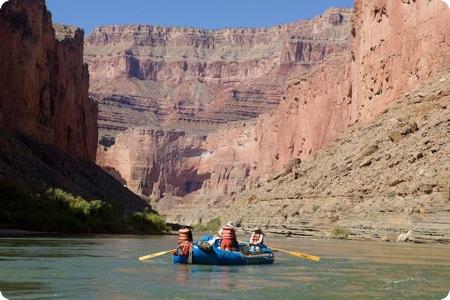
We're all happy to have "Daddy" home now, and he seems relaxed and refreshed. As you can see from this photo, the river is mostly very calm, and it is rare for a boat to flip or for anyone to fall out. In fact, kids as young as age 12 are allowed to join this trip.
Rafting gave P a much needed break from the world of computers and cell phones. While it was tough for us not to talk to him at all, I'm glad that he got a rare opportunity to unplug, read, hike every day, and sit around in the evenings telling stories with his guy friends.
The trip was luxurious in some ways, and not in others. The guides brought along everything that was needed, including enough ice cubes to last the duration of the trip. I hear that they were pros at cooking chocolate cakes over a campfire, and it sounds like husband ate better than he does at home. The Grand Canyon is a conservation area, and no campfires are allowed. Everything (including human waste) must be packed back out of the Canyon when you leave. There are no facilities, and baths were taken (very quickly) in the cold river water. Thankfully, the men were all given access to a real shower before boarding their plane back to Seattle!
Photo Friday: Please Share Your Photos Too:
Share a favorite travel photo by adding your link below. First timers, here is
more Information about Photo Friday
Filed Under:
photo-friday
16 comments |
Posted on October 9, 2008 |
Save to del.icio.us
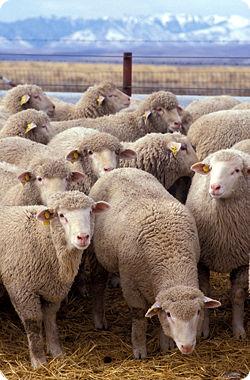
CNN.com had a great article recently on budget tips for family travel, and I was intrigued by the idea of a family farmstay. A farmstay is an arrangement where you stay on someone's farm, and have the opportunity to help out as much as you would like (but you are not required to). Prices are usually very reasonable, but beyond that, it just seems like a great experience. My city-kids don't know much about where their food comes from and are overdue for a lesson.
In my area, I'm intrigued by the Leaping Lamb Farm (south of Portland, OR) and Fairburn Farm on Vancouver Island.
Has anyone tried a Farmstay? What was your experience like? Let me know in comments.
Filed Under:
budget
2 comments |
Posted on October 9, 2008 |
Save to del.icio.us
Welcome to the Carnival of Cities, a round-up of recent articles about cities around the world.
I'm hosting this week's edition of the Carnival of Cities for Sheila at FamilyTravelLogue. The next few weeks will be hosted by some great bloggers including: Liz at Traveling the Green Way (Oct 15) then Anil at FoXnoMad: Travel Smarter (Oct 22) and finally Mara at The Mother of All Trips (Oct 29.)
Would you like to join the carnival next time? Submit your (one, non-spammy) blog post about any aspect of a SINGLE city - thanks!
US Cities
GrrlScientist presents 42nd Street/Times Square Subway Art 2 posted at Living the Scientific Life, saying, "Losing my Marbles, image 2. Glass mosaics on mezzanine walls of NYC's 42nd Street (Times Square) for the A, C and E trains. This mosaic was just installed since I photographed it as the adhesive was still drying and the workmen were sweeping up their mess!"
Jennifer Miner presents Recommended Family-Friendly Halloween Events in Los Angeles, California posted at Traveling Mamas.
Amy @ The Q Family presents The Q Family Adventure: You Will Find Me Here... posted at The Q Family Adventure, saying, "A brand new family friendly condo in Destin area that we will enjoy in a few weeks.
Debbie Dubrow (that's me) presents Chicago With Kids: Field Museum and Jazz Showcase posted at DeliciousBaby saying, "Will my 3 1/2 year old sit through an entire Jazz Show? Read and find out."
Europe
Sheila Scarborough presents Travel to teach your kids: what my daughter learned in Belgium’s Flanders Fields | Family Travel Guide posted at Family Travel Guide, saying, "Why take your kids to learn about wars and battle? It's too important not to. Here's how my preteen, her grandparents and I visited the WWI battlefields near Leper, Belgium."
Middle East
Wendy presents Bling Bling Dubai Style posted at Escape From New York, saying, "Dubai’s Bling Bling reputation isn’t all about its uber modern architecture."
South America
Marilyn Terrell presents Intelligent Travel: September 2008 posted at Intelligent Travel, saying, "Andrew Evans tries to cross a bridge outside Panama City, Panama."
That concludes this edition. Submit your blog article to the next edition of
carnival of cities
using our
carnival submission form.
Past posts and future hosts can be found on our
blog carnival index page.
Technorati tags:
carnival of cities, blog carnival.
3 comments |
Posted on October 8, 2008 |
Save to del.icio.us